Silence

Hello chatter, my old friend.

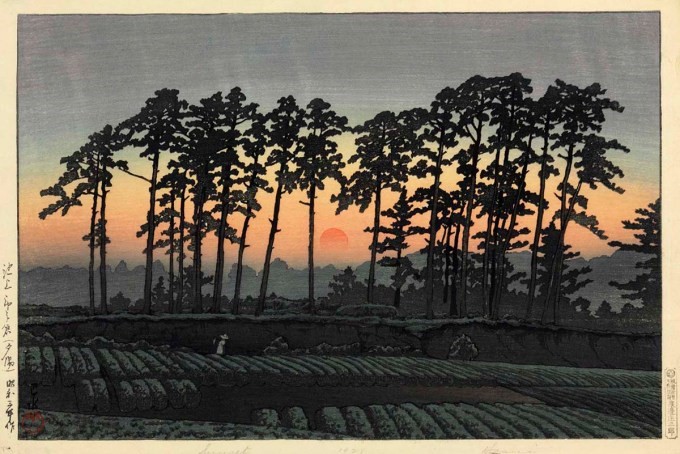
The sounds of silence are a dim recollection now, like mystery, privacy and paying attention to one thing — or one person — at a time.

As far back as half-a-century ago, the Swiss philosopher Max Picard warned: “Nothing has changed the nature of man so much as the loss of silence,” once as natural as the sky and air.

As fiendish little gadgets conspire to track our movements and record our activities wherever we go, producing a barrage of pictures of everything we’re doing and saying, our lives will unroll as one long instant replay.

There will be fewer and fewer of what Virginia Woolf called “moments of being,” intense sensations that stand apart from the “cotton wool of daily life.”

“In the future, not getting any imagery or story line or content is going to be the equivalent of silence because people are so filled up now with streaming video,” said Ed Schlossberg, the artist, author and designer who runs ESI Design. “Paying attention to anything will be the missing commodity in future life. You think you’ll miss nothing, but you’ll probably miss everything.”

Schlossberg said that, for a long time, art provided the boundary for silence, “but now art, in some cases, is so distracting and intense and faceted, it’s hard to step into a moment. Especially when you’re always carrying a microcamera and a screen all the time, both recording and playing back constantly rather than allowing moments of composition and stillness when your brain can go into a reverie.”

I wish I had written this, but whoever did is lost to memory (especially since I didn’t write it down.) So, if anyone recognizes it, please let me know and I’ll add it here. Thanks.

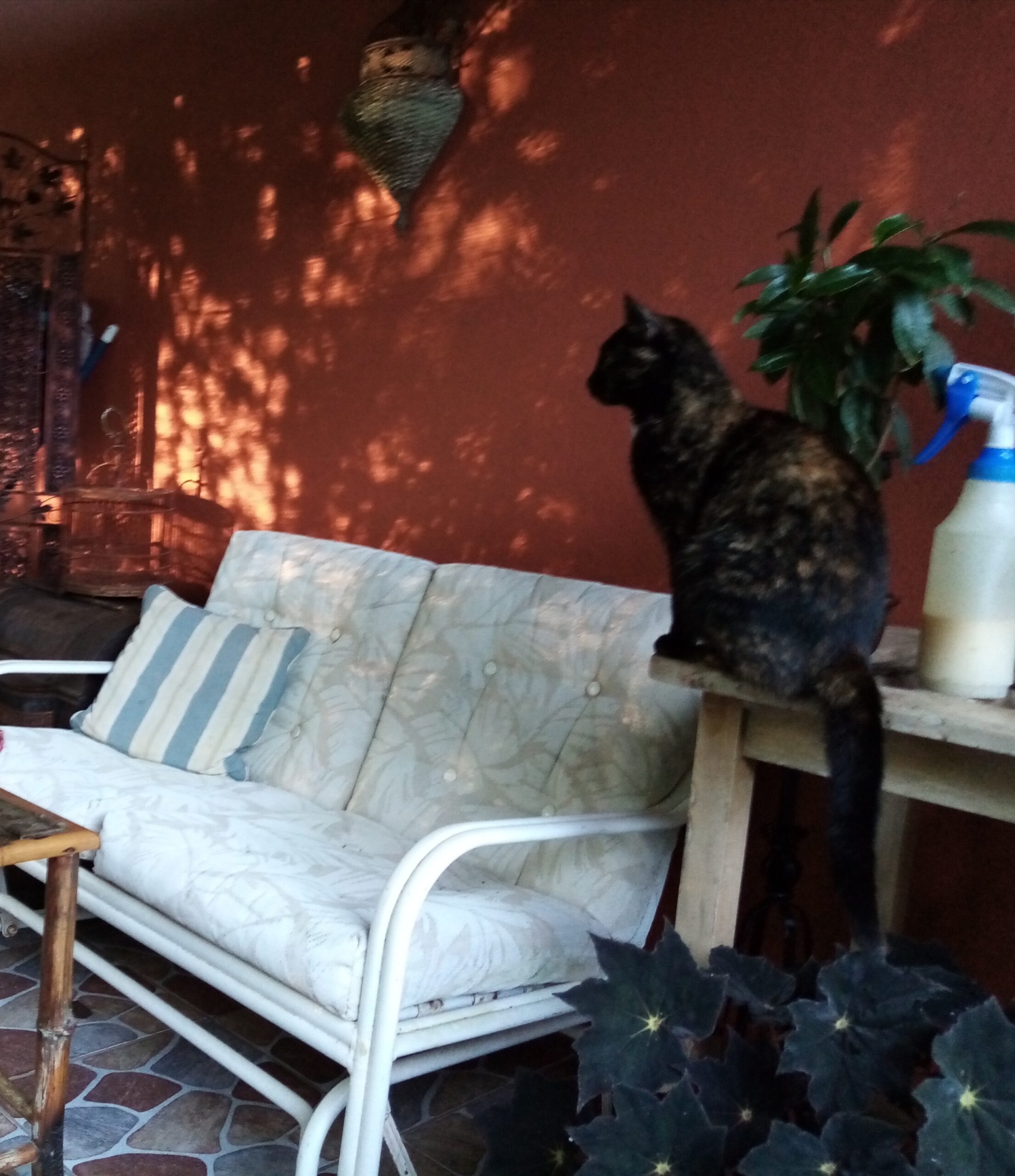
Photo by SSH

One Day at a Time

One day at a time –

One cloud humming in a pure sky,

One dying tree,

Russet leaves falling.

The flight of one hawk calling

The laugh of one young monkey

In the towering trees,

One caught gecko cheeping

Between my cat’s teeth.

One call from a friend –

Oh, how deep this goes!

One coyote’s song

So wild, so old.

All I have to do,

While I am waiting,

Is listen

One day at a time.

SSH

Photo by Scott Suriano

10 Questions Never to Ask a Writer

Reposted from a blog by By Lauren B. Davis | January 4, 2010 | 40

I wonder how many of you have asked a writer of your acquaintance what you thought was a perfectly harmless question, one intended to show your interest in that person and what they do, only to be rewarded by a mumbled response, possibly a trembling chin, or, horrors, a glower.  You walk away thinking, What’s wrong with these writer people?  Have they no manners? Well, sadly, some of us don’t, but it’s more likely you’ve stumbled upon one of the questions likely to leave us at…well, a loss for words.

I don’t mean to suggest that writers are such fragile flowers that no one should approach us for fear of having us break down in puddles if asked the wrong question.  Really, that hardly ever happens.  But if you do detect a slight twitch, or an inadvertent sigh, perhaps it’s because you’ve asked a perfectly well-meaning, seemingly reasonable question, one that if you asked anyone else wouldn’t be a problem.  However, as writers, alas, we’ve probably been asked that question a thousand times before, and wouldn’t mind at all, if we had a decent answer, but we don’t, and so we mumble and sigh and twitch and go and stand behind the potted palm where it’s safer. It’s embarrassing to stand there with a drink in one hand and a palm frond up the nose.  Uncomfortable for everyone, really.

So, for next time…these are some questions writers dread, in no particular order:

1. How’s the novel coming? Well, probably not very well.  Novels are wild, unwieldy beasts that resist being tamed.  Really, do you want to hear how Faulkner spent twelve hours writing a scene about looking at young girl’s dirty underpants as she climbed a tree?  Probably not, and that was the definitive scene in The Sound and the Fury, so imagine how much less you’ll want to read about that eel-skinning scene I labored over for hours yesterday, only to erase today.  To quote Oscar Wilde, “I was working on the proof of one of my poems all the morning, and took out a comma.  In the afternoon I put it back again.”

There is also a story about James Joyce wherein someone came round to see The Great Man as he worked in his Paris garret

“How are you, James?” he said.  “You don’t look so good.”

“I’m terrible.”

“Is it the writing?”

“Of course it’s the feckin’ writing!  It’s always the writing!”

“Can you not write then?  Are you blocked?”

“I’ve written seven words today.”

“Well, James,” said the friend, “for you, actually, that’s not bad.”

“I suppose,” said the Great Man, “but now I’ve got to figure out what order to put them in.”

Thus, it’s a question for which there is no good answer, and we know it.

2. Are you writing? If I am, see 1. above. If I’m not, you really don’t want to know.  The only thing worse than having writer’s block is talking about it.  Having to listen to such panicked whining is recognized as torture and we wouldn’t dream of inflicting it on you.

3. Has your novel sold? Sad to say, but it’s unlikely.  Publishing is a slaughterhouse these days, and even in the Good Old Days (if ever there were any), almost no one published, and of the minuscule number who did, almost none of those published a second novel.  Having to answer that question over and over again is like rubbing glass in an open wound.  Believe me, if there’s good news, we’ll be telling you.  Heck, we’ll be telling EVERYONE! Most of us write because we can’t stop writing – it’s a sort of mental illness – and thus we do so in spite of the searing disappointments.  Try not to make us talk about it.

4. When’s that new book coming out? Let’s put it this way: if, since the last time we spoke, I’ve finished the manuscript, submitted it to my agent, my agent has read it (which usually takes three months because they are busy, important folks), and loved it just as it is with no changes at all; if the agent has then in turn submitted it to editors and one of them has read it (think another few months or so, or more, since editors are also important, busy folks), and that editor LOVED it, and showed it to the sales force (the important people who really run publishing these days) and the sales force LOVED it just as it is, and made an offer……. even if ALL those things have already happened, it will still be around TWO YEARS before the book will actually come out, due to the editing and production process.  So, if you’ve asked this question once in the past three years, you needn’t ask it again. Also, see 3).

5. I just love the new Dan Brown novel (or Sarah Palin’s memoir), have you read it yet? My condolences, and no.

6. How come I can’t get your books here? And by ‘here’ you probably mean America. This one may not apply to all writers, but it will to a surprising number of us.  Especially if we are, say, from Canada or Britain or Ireland or Scotland or New Zealand or Australia… doubly so if we are from a country where English isn’t the first language (and no jokes about Scotland, please).  Although, with some justification, America views itself as the center of the universe, people do publish in other countries, and getting published in England does not mean a writer will find a publisher in New York, which considers itself (again, with some justification) as the center of the center of the universe.  Without a publishing contract in the US, the book will not be available to the US market.  You could, however, go on the internet and order books from bookstores in the US or Canada or gasp, even Australia.  I do it all the time.

7. Is that story autobiographical? Until my parents are all dead, the answer to that is no.  I’m joking, really Mum, I am.  However, it can be a bit insulting to a writer to have everyone think that a) you really were a junkie porn star homicidal trust fund baby and just kept it a secret, or that b) you haven’t the imagination to MAKE THINGS UP, which is, after all, what fiction writers are supposed to do, mostly. I will paraphrase what W. Somerset Maugham said, though, in that writers are not God, we cannot create out of nothing.  Everything is inspiration and fodder, even cocktail party conversations.

8. Oh, you’re a writer! Have I heard of you?  Do I know your books? I have no idea, but if not please don’t make it sound as if I’ve failed. Might I suggest, if you’re interested, you note one of the titles and buy a book?

9. How big an advance did you get? How many books did you sell? Now really, didn’t your mother ever tell you it was impolite to ask someone what they make for a living?  It will either be shockingly low by your standards, or shockingly high, neither of which is useful information. People in France, where I lived for many years, never ask these sorts of particularly American questions.  They ask instead, “Where can I buy one of your books?” Which is a lovely question, since it implies they are a) interested in your work, and b) interested in supporting your work by actually BUYING a book.

10. What’s the book you’re working on about? Two problems with this question: the first is that if I talk too much about it, I won’t write about it, so I don’t mean to be rude, but I don’t want to answer that question.  (Most people are pretty good about that and don’t take offense, but you’d be surprised, perhaps, by how many do.)  The second problem is that I may not know.  I write a story that pops into my head, but I may not know what it’s really about until a long way down the line.  When I was writing The Radiant City, it wasn’t until I was through the first draft, and heard Rev. Ernest Hunt, the Rector at the American Cathedral in Paris, say, “Cynicism is the last refuge of the broken-hearted” that I understood I was writing about precisely that – whether disillusionment, the kind that breaks your heart, like terrorist attacks, or war, or genocide, damns you to a life of cynicism, or if it’s possible to continue to walk through the world with a compassionate heart. (The quote became the epigram of the book.  Thanks Ernie!)

And although it’s not a question, there is one statement that’s almost guaranteed to send a writer scrambling to a safe nest behind the potted palm:  “I’m going to take six months off from my job and write a book.”

Legend has it this statement was made to either William Styron or Margaret Lawrence, depending on who’s telling it, by a heart surgeon at a cocktail party.  As in, “I just loved your book so much, and you’ve inspired me.  I’m going to take six months off from my job and write my own memoir.”  “Really,” replied William/Margaret. “Well, you’ve inspired me as well.  I’m going to take six months off from writing and become a heart surgeon.”

I wouldn’t have the guts to say that, but I admit it, I do think it from time to time. It takes as long to learn to be a good writer as it does to do anything else – play the violin, perhaps, or architecture, or yes, heart surgery.  And just like those things, having just a soupcon of talent doesn’t hurt.

So at this point you might be asking yourself what you CAN ask a writer.  Well, we love talking about books we’ve enjoyed, as well as anything else that inspires us. And as writers we tend to watch the world pretty closely, since you never know when a story worth writing about may pop up, so current affairs are just as interesting to us as to anyone else.  Then too,  if we’re well-brought up, psychologically stable folk (and some of us are), we probably think YOU’RE pretty interesting. You might not want to answer questions about, say, how much you make for a living, and I wouldn’t dream of asking you, but I’d be fascinated to learn, for example, what you believe and how you came to believe it.  I’d like to know how you met your spouse, and what you think about the death penalty, and why; and what you think about censorship, and that story about fly-fishing, and the one about the rescue dog, and what you think it means to be a good person… oh, there’s a world of things out there to talk about, isn’t there?

Photo by SSH

I Thought the Ocean was Forever

From The Guardian

We hear the call of the sea in poems from Coleridge and Eliot to Kathy Jetn̄il-Kijiner, but those words also sound a warning – if only we would listen

David Farrier, Mon 26 Dec 2022

TS Eliot wrote The Dry Salvages as second world war bombs fell on London. The poem imagines humanity adrift in a leaky boat, the sea “all about us”. But poetry, like the sea, is never still. “Where is there an end to the drifting wreckage,” the poem asks. The answer: “There is no end, but addition” reads differently in 2022 than in 1941, as 12m tonnes of plastic are added to the oceans each year.

Reading is tidal, and each tide brings with it new associations. It is difficult now to read John Masefield’s Sea-Fever without thinking of bleaching coral, or Samuel Taylor Coleridge’s The Rime of the Ancient Mariner without picturing Chris Jordan’s photographs of dead albatross, their stomachs full of brightly coloured plastic. “‘Hope’ is the thing with feathers,” but avian flu is decimating seabird populations.

Poetry, both old and new, not only reveals the oceans’ uncanny beauty, it also frames the monstrous dilemmas of rising seas, pollution, and declining biodiversity.

Marshallese poet Kathy Jetn̄il-Kijiner’s collection Iep Jaltok confronts the existential challenge of sea-level rise for island nations. In 2 Degrees, her infant daughter’s fever prompts a bitter reflection on the arrogance of fossil fuel-consuming nations: the difference between 1.5C and 2C “Seems small … just crumbs / like the Marshall Islands / must look / on a map”. Jetn̄il-Kijiner was the Marshall Islands’ climate envoy at Cop27, and criticised the failure to phase out fossil fuels even as developing nations celebrated the loss and damage fund.

“The call of the running tide / Is a wild call and a clear call that may not be denied;” writes Masefield in Sea-Fever. Likewise, the Marshall Islands’ claim to a liveable future in the face of rapidly rising tides is – or ought to be – irresistible.

There is hope in these poems, but it’s something made in the face of grim predictions. Two poems, arranged to resemble baskets, bookend Jetn̄il-Kijiner’s collection, the words like tiny atolls in the white sea of the page:

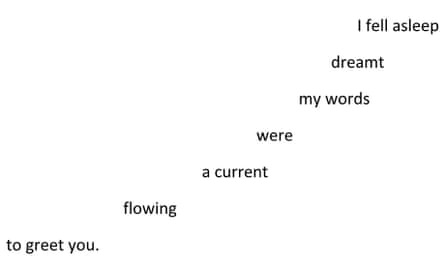
Kathy Jetn̄il-Kijiner poem from Iep Jaltok collection

The loss of indigenous cultures washes away whole worlds. Among the Inupiaq of Alaska, seals, whales and seabirds are people. Even “Oil is a People,” writes Inupiaq poet dg nanouk okpik. Throughout her collection Corpse Whale, okpik uses a split pronoun, “she/I”, to express this sense of shared personhood. “Will they crawl around her / me, sink their eyeteeth in the sea,” she asks in If Oil is Drilled in Bristol Bay.

“Where they want / to claim the sea for roads,” she writes in No Fishing on the Point, “She’s/I’ve watched the currents, / […] / which bring […] feasts, and famine.”

For much of human history, the sea’s vastness has suggested eternity, a metaphysical space into which we have poured both our dreams and our waste. There are at least 415 marine dead zones around the world, areas so polluted by nitrogen and phosphorus that the water is free of oxygen. Like the “the rotting sea” of Coleridge’s poem, where “a thousand thousand slimy things / Lived on;” nothing can survive in a dead zone, except jellyfish and bacteria. “Globe globe globe globe,” pulses the jellyfish in Les Murray’s poem, Jellyfish, intimating both its soft-bodied shape and the prospect of a future ocean dominated by anoxic life.

But poetry isn’t science; not bound simply to report on the state of things, poetry is free to imagine what could be. Brenda Shaughnessy’s The Octopus Museum presents a future Earth ruled by cephalopods, creatures whose intelligence is proof that, as the philosopher Peter Godfrey-Smith puts it, “the mind evolved in the sea”. In Caleb Parkin’s day-glo collection This Fruiting Body, chromatophoric creatures rave (“your skin / sings eight-thousand synthesised octopoid loops”) and Ecco the Dolphin, the hero of Sega’s 1990s video game classic, “roves immaculate 16-bit oceans”.

Parkin’s poems celebrate a fluid nature uncontained by binary thinking. A carrier bag floating in the sea becomes “a lazy misremembering / of plankton masses”. The synthetic and the organic flow into one another. That fluidity can be deadly: turtles eat plastic bags because they resemble “the ghost of a jellyfish”. But Parkin’s carrier bag wants no more than “to unpack itself […] / to become once again bustling plankton masses.” We know some bacteria colonise marine plastic, and have even evolved to metabolise it. The force underpinning all life, Parkin reminds us, is desire.

Desire is also the main current of The European Eel, Steve Ely’s lush recreation of the incredible transatlantic migration eels undertake to their spawning grounds in the Sargasso Sea. Little is known about their ocean-going lives, but in Ely’s telling it becomes a testimony to life’s irrepressibility. A female eel will gradually consume her own body to fuel the journey, “reducing herself to the seed of her species’ future”. It culminates in an ecstatic account of eel sex, coiling in billowing clouds of golden milt and ova, “sparks from the cornucopian flame / of Archaea’s unkillable, dark pleroma”.

Life thrills in the shallows as well as the deep. The glory of the foreshore is celebrated in Of Sea, Elizabeth-Jane Burnett’s bestiary of the intertidal zone. Mud shrimp drifting with the tide float in “silk light”; ragworm, burrowing in estuarine mud, shimmer “in all the love of being”.

We might say a poem is a bit like a boat, a vessel borne aloft by rhythms that surge or eddy. It is also like the sea itself, with its deep places and ever-receding horizon. “The sea has many voices,” observes Eliot in The Dry Salvages. More than anything, the many voices of oceanic poetry declare the vitality of life even in the midst of crisis. “There is a lullaby in all of us,” Burnett writes, “a call of sea”. If only we would listen.

David Farrier is professor of Literature and the Environment at the University of Edinburgh, and the author of Footprints: In Search of Future Fossils

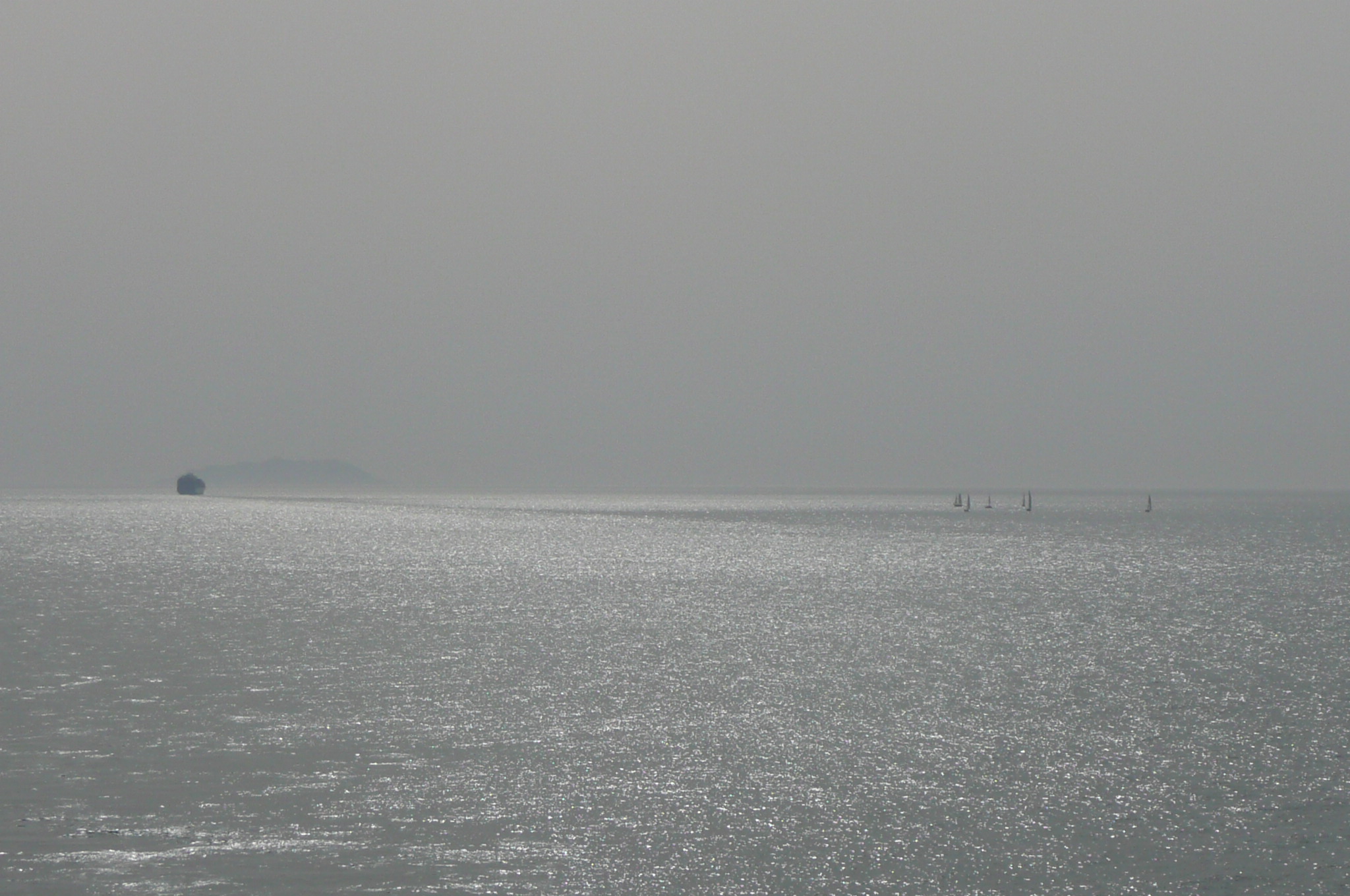
Photo by SSH

Perspective

I am standing on the seashore.  A ship at my side spreads her white sails to the morning breeze and starts for the blue ocean.  An object of beauty and strength, she sails into the distance diminishing in size, until she hangs like a speck of white cloud where the sea and sky mingle.

 Then someone says, “There!  She’s gone.” Gone where?  Gone from my sight—that’s all.  She is just as large in mast and hull and spar as she was when she left my side, and she is just as able to bear her load of living freight to the place of her destination.

 But her diminished size is in me, not in her; and just at the moment when that someone at my side says, “There!  She’s gone,” there are other eyes watching her coming and other voices ready to take up the glad shout, “Here she comes!”

Henry Van Dyke

Photo by SSH

Endings

In literature, we have a chance for closure. We can put the punctuation mark wherever we like, whether it marks the end of grief, the beginning of a relationship, the birth of a child, the end of a life, or the decision to live again. . . . Writers are not seers. Armed with the “knowledge of what has gone before,” we mold events, truths, into narrative, and hope and know that the last punctuation mark is not the end, but the invitation to begin again.

http://blog.pshares.org/index.php/author/evdecleyre

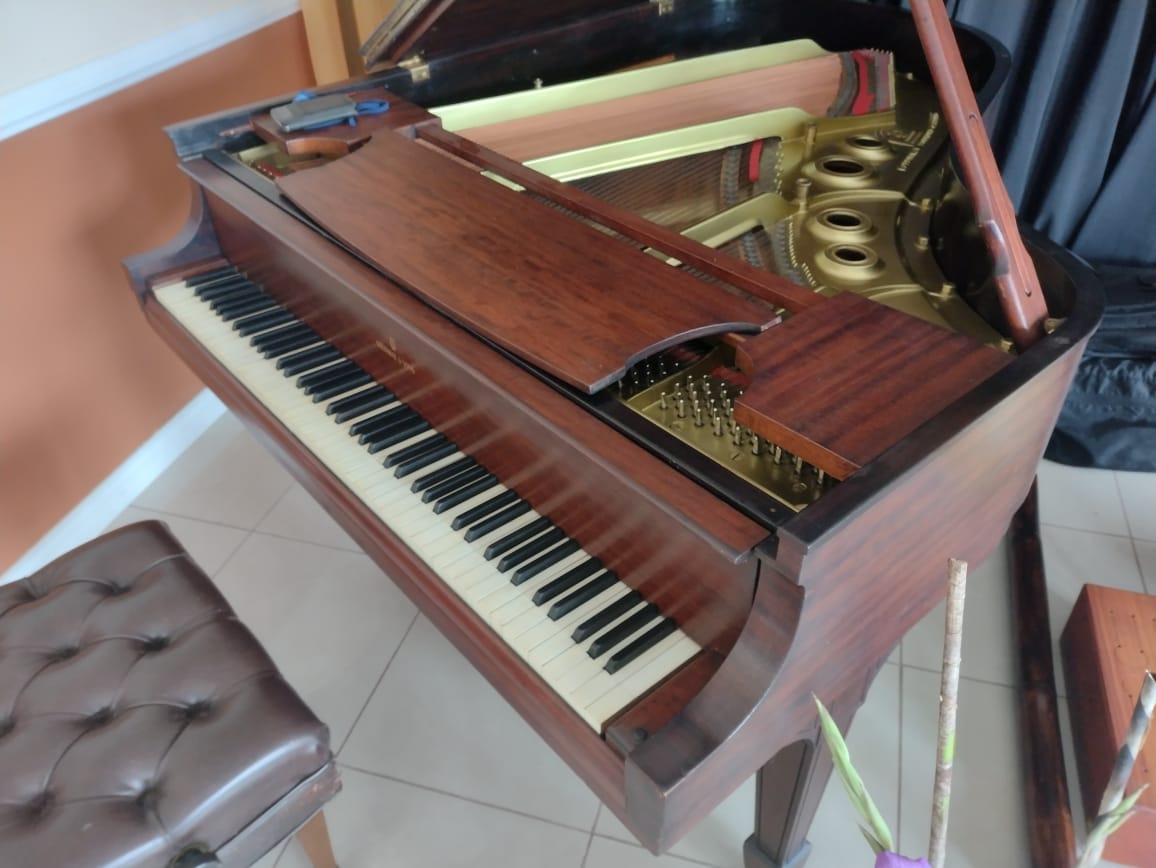
Photo by SSH

When the Music Plays You

“I love trying to spin the world into a web of words. And I love those times when it feels like those words turn into a world of their own.”  — Rose Auslander 

I am seventeen and practicing the piano.  I go at it two hours a day, and no longer need the nagging of my parents, when I used to prefer playing softball after school. The work itself is its own reward, playing a passage over and over at different rhythms, until it comes out smooth as silk.  

I rarely practice after dark, since I don’t want to disturb my father, who may have brought work home.  But now that I’m on the yearbook committee, there are days when I simply have to. It’s winter and the room is dark except for the light over the piano, and I feel my father’s entrance and his quiet sigh as he sits down well away from the piano and me.

It is near the end of my practice session, when I play something for pure pleasure, and tonight it’s a Schubert impromptu, a piece I love to play, complex and romantic.  I am aware that my father is in the room; I am aware of all the ambiguities of our relationship; I know, however, that my ability to play so well has pleased him, and that falls into the complexity of Schubert, me, my father, the abuse, all the pain of never knowing if he has loved me or not. 

Somehow, I throw myself into the music, I become the music, the music — Schubert — is playing me.  It’s transformative. I am no longer in this darkened living room.  My father is still here, because there is a musical line connecting us, and I thrill as the phrases and chords and notes become a world of their own — a world described by incredible beauty and freedom. And at the end, I bow my head over the keys and feel full of the act of love I have just performed.

Photo by Roger Eichholz

Seeing from the Heart

I believe natural beauty has a necessary place in the spiritual development of any individual or any society. I believe that whenever we destroy beauty, or whenever we substitute something man-made and artificial for a natural feature of the earth, we have retarded some part of man’s spiritual growth.

I believe this affinity of the human spirit for the earth and its beauties is deeply and logically rooted. As human beings, we are part of the whole stream of life. We have been human beings for perhaps a million years. But life itself — passes on something of itself to other life — that mysterious entity that moves and is aware of itself and its surroundings . . . . Our origins are of the earth. And so there is in us a deeply seated response to the natural universe, which is part of our humanity.

Rachel Carson

Another Stellar Review of Evelio’s Garden

I read Evelio’s Garden slowly so as to enjoy every moment to the full. I enjoyed the prose, as well as the combination of the author’s personal moments with the beautiful descriptions of places, landscapes, nature and people, all of which make the reading very agreeable. The strength and positive attitude with which she confronts the vicissitudes and difficulties, without losing her calm and sense of humor, are admirable. The descriptions of some of the situations are really comical: for example, the bonsais, Ruth and the bats, the rice and beans on her bus trip to San José. The relationship with Evelio is truly special; her patience, tolerance and empathy are admirable. The way she describes moments of frustration, pain and anger, along with happiness and humor is marvelous. All of these elements mixed with the descriptions of people, customs, the culture, birds, plants and the countryside, made for me, one of those “trips” that will never be forgotten.  My gratitude for the gift of these memoirs and the hours of pleasure I spent reading them. — Enrique Venegas

Finding the Right Words

For a long time, I have looked for a way to describe my connection to the natural world.  I tried in Evelio’s Garden, but no writer that I have encountered since has come as close as I have the privilege to quote here. Of  course there have been many before me, but none that I have discovered as right on as these two: Robinson Jeffers and Oliver Sacks. (And I’ll keep looking!)

The parts change and pass, or die, people and races and rocks and stars, none of them seems to me important in itself, but only the whole. This whole is in all its parts so beautiful and is felt by me to be so intensely in earnest, that I am compelled to love it, and to think of it as divine. It seems to me that this whole alone is worthy of the deeper sort of love; and that here is peace, freedom, I might say a kind of salvation.

— Robinson Jeffers

This image has an empty alt attribute; its file name is image.png

The sense of deep time brings a deep peace with it, a detachment from the timescale, the urgencies of daily life. Seeing these volcanic islands and coral atolls, and wandering, above all, through this cycad forest on Rota, has given me an intimate feeling of the antiquity of the earth, and the slow, continuous processes by which different forms of life evolve and come into being. Standing here in the jungle, I feel part of a larger, calmer identity; I feel a profound sense of being at home, a sort of companionship with the earth.

 – Oliver Sacks

Telling Stories

There’s a big difference between writing stories and telling them out loud. This is something I’ve discovered as, over the years, I have recorded bits and pieces of various things I have written. Somehow, the spoken word is infinitely more powerful. Recently I was invited by an interviewer to record a story from Evelio’s Garden, and since her website focused on finding joy in our lives, I picked robins and sea lions. Well, listen and you’ll see how they’re related.

Georgia O’Keefe on the Art of Seeing

I

GeorgiaOkeeffe_RedCanna_1924.jpg?resize=680%2C823

Georgia O’Keeffe, Red Canna, 1924 (Georgia O’Keeffe Museum)

In a passage originally published in the exhibition catalog An American Place, she writes, “A flower is relatively small. Everyone has many associations with a flower — the idea of flowers. You put out your hand to touch the flower — lean forward to smell it — maybe touch it with your lips almost without thinking — or give it to someone to please them. Still — in a way — nobody sees a flower — really — it is so small — we haven’t time — and to see takes time, like to have a friend takes time. If I could paint the flower exactly as I see it no one would see what I see because I would paint it small like the flower is small.

“So I said to myself — I’ll paint what I see — what the flower is to me but I’ll paint it big and they will be surprised into taking time to look at it — I will make even busy New-Yorkers take time to see what I see of flowers.

“Well — I made you take time to look at what I saw and when you took time to really notice my flower, you hung all your own associations with flowers on my flower and you write about my flower as if I think and see what you think and see of the flower — and I don’t.”

Listen to the Author Reading “A Thousand Shades of Green” from Evelio’s Garden

When you’re writing, sometimes surprising things spill out. This little prose poem was completely spontaneous; it didn’t follow any plot line nor was it the product of any forethought. It came from a moment of pure presence with what I was doing. I looked at it on the screen, slightly amazed, and decided to leave it in.

Photo by SSH

“Forthcoming memoir” is Coming Forth!

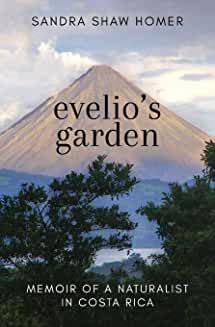
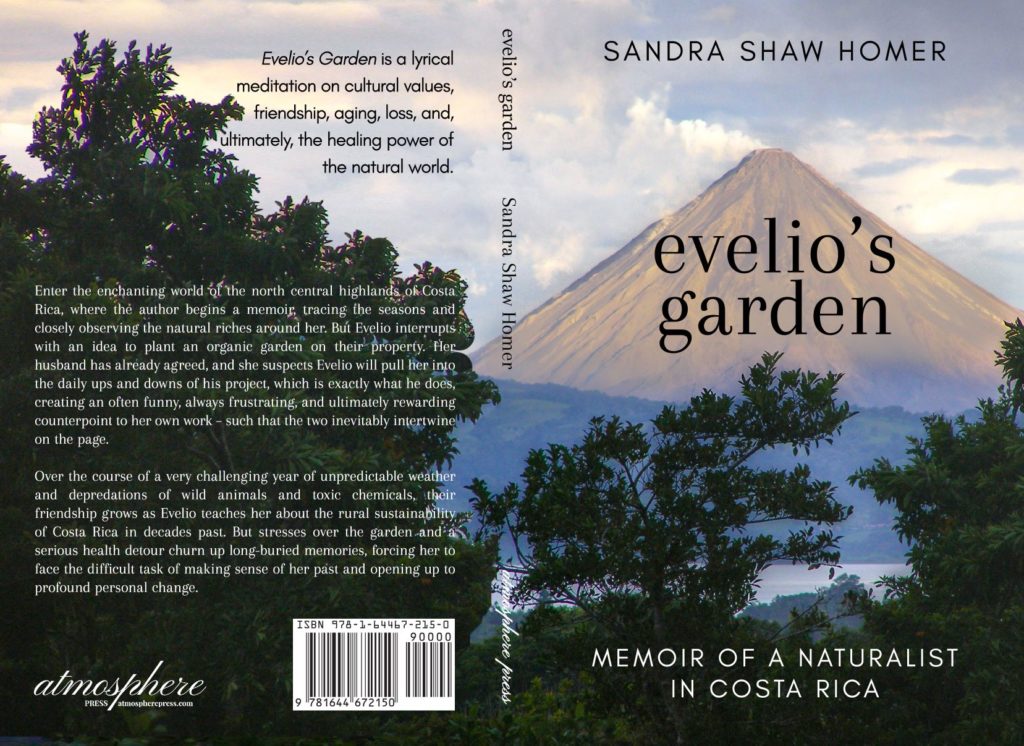
Evelio’s Garden: Memoir of a Naturalist in Costa Rica is coming in September (as soon as I have a few reviews to put on the back cover). Published by Atmosphere Press, a small collaborative publishing house, it looks almost too good to be true.

I had let it slide for a while (ten years???) after contacting a zillion agents who were not thrilled — although some said it was beautifully written — because in the hurly-burly world of major publishing, a small, even beautiful, book needs a lot of extra work to become its own little profit center.

Even after all the work editor Allyson Latta had put into it, I still lacked confidence after so many rejections, but something stirred me when I saw a call for submissions by Atmosphere Press in a publishing newsletter. After I had jumped through so many hoops with the agents (send first and third chapters; send first five pages and a marketing summary; send synopsis of no more than 300 words, etc.) all this press wanted to see was the manuscript!

Well, that was just too easy, so I sent it — what the hell? — and a few days later I had a note from the publisher, Nick Courtright, a well-known poet in his own right, saying they would like to take it. I was flabbergasted: this was really too easy. So I hemmed and hawed for a few days (was that weeks, Nick?) until agreeing to go forward.

Nick put me in touch with one of their editors, with whom I had an excellent few weeks of working together — he liked it! — and I was beginning to feel a little jazzed. So, here it comes:

More later!


Navigating Winexch feels less like a chore and more like a casual stroll through familiar streets

Exploring Winexch: A User-Friendly Approach to Digital Exchanges

What Makes Winexch So Approachable?

Anyone who has spent time navigating complex digital platforms knows how draining it can be to figure out their ins and outs. Winexch, by contrast, stands out because it feels less like a chore and more like a casual stroll through familiar streets. The interface embraces simplicity without sacrificing the robust features expected from a modern exchange platform. This balance is what draws users back, making every interaction feel intuitive rather than overwhelming.

At the heart of this experience is a design philosophy that prioritizes user comfort. Even newcomers find themselves quickly oriented, exploring options like currency swaps or digital asset management with ease. For those interested in discovering more about how this environment works, winexch offers plenty of insights and tools designed to ease the journey.

Diving Deeper Into the Features

Winexch is not just about ease of use; it also supports a variety of digital assets, including cryptocurrencies and tokenized assets that have gained traction since 2018. Its integration with reliable providers ensures transactions process smoothly, with standard security measures like SSL encryption safeguarding user data.

One standout feature is its support for multiple payment methods, including widely adopted systems like BankID and Vipps. This versatility appeals to a diverse user base, allowing for seamless deposits and withdrawals. The platform also maintains regulatory compliance, which adds a layer of trust for users hesitant about digital exchanges.

Practical Tips for Getting the Most Out of Winexch

If you’re new to this kind of platform, a few pointers can save you a lot of time and frustration:

  1. Start with small transactions to familiarize yourself with the flow and fees.
  2. Regularly update your security settings and never share sensitive information.
  3. Keep an eye on transaction confirmation times, which can vary depending on network traffic.
  4. Explore available tutorials or community forums for insights from experienced users.
  5. Be mindful of responsible usage—digital exchanges can be exciting, but caution is necessary.

From my experience, these simple steps help make the entire process less intimidating. It’s easy to get overwhelmed by jargon or the sheer volume of options, but pacing yourself and using available resources can turn the experience into something genuinely enjoyable.

How Winexch Compares with Other Platforms

Many digital exchange platforms tend to overwhelm users with complex dashboards or cryptic processes. Winexch’s straightforward layout and emphasis on clarity present a refreshing alternative. Unlike some competitors that prioritize advanced traders, this platform appears to cater to a wider audience, including those who prefer a more relaxed, almost casual approach to asset management.

The inclusion of popular games and entertainment elements, such as titles from Play’n GO or Pragmatic Play, reflects an understanding of user engagement beyond mere exchange mechanics. While it’s not a gaming site, these integrations offer a subtle nod to the evolving demands of digital communities.

What To Keep in Mind When Using Digital Exchanges

Digital exchanges like Winexch offer exciting opportunities but also require a degree of responsibility. Market volatility, security risks, and regulatory changes can all impact user experience. While the platform incorporates many safeguards, it’s essential to remain vigilant and informed.

Users should also consider setting personal limits and maintaining a balanced approach to digital asset trading or exchange activities. Remember, the goal is not just to navigate the platform but to engage in a way that aligns with your financial comfort and long-term plans.

Navigating 9kboss feels like stepping into a puzzle where every click invites a new discovery

Exploring the Intricacies of 9kboss: A Journey Through Digital Discovery

Unpacking the Allure of 9kboss

When you first encounter 9kboss, it quickly becomes clear that this platform isn’t just any ordinary digital space. It invites you into a realm where every interaction feels like solving a piece of a larger puzzle. The charm lies in the subtle complexity behind its interface and content, making the journey as engaging as the destination itself. Navigating through 9kboss feels less like browsing and more like an expedition filled with moments of unexpected insight and discovery.

There’s a certain rhythm to the way 9kboss presents information. It’s neither overwhelming nor too sparse but strikes a balance that encourages exploration. For those who enjoy unraveling digital mysteries, this site offers a treasure trove waiting to be unlocked. It’s easy to get drawn into the process, wondering what the next click might reveal.

For instance, 9kboss often surprises users with layered content that combines educational elements with interactive components, creating a unique user experience. This approach is somewhat reminiscent of puzzle games where the player’s curiosity drives the narrative forward.

The Role of Interactive Design in Engagement

One of the defining characteristics of platforms like 9kboss is how design influences user engagement. Instead of static pages, users encounter dynamic elements that respond to their choices, making the experience feel personalized. This interactivity can evoke a sense of discovery similar to flipping through pages of a mystery novel where every chapter introduces a new clue.

From a technical perspective, such interactivity leverages modern web technologies that allow instantaneous feedback and seamless transitions. These tools create an immersive environment that encourages longer visits and deeper reflection on the content. It’s a subtle invitation to not just consume but also participate.

In the realm of digital products, this kind of engagement is increasingly prized. It challenges the traditional passive consumption model and leans into active exploration. The metaphor of a puzzle is fitting, as it demands a certain level of attention and curiosity from its users.

Practical Tips for Navigating Complex Platforms Like 9kboss

While the puzzle-like nature of 9kboss adds to its appeal, it can also be a source of frustration for first-time visitors. Knowing where to start or how to dig deeper can make all the difference in the experience. Here are a few tips to get the most out of such a platform:

  1. Start with a clear goal: Identify what you want to learn or achieve to avoid aimless wandering.
  2. Take notes: Jot down interesting points or links that might be useful later.
  3. Explore systematically: Instead of random clicks, try to follow logical paths or categories.
  4. Reflect on discoveries: Pause occasionally to connect the dots and appreciate the bigger picture.
  5. Be patient: Complex platforms reward persistence more than speed.

Personally, I find that approaching such platforms with a mindset akin to solving a mystery novel enhances the experience. It turns the navigation into a rewarding challenge instead of a mundane task.

Content Diversity and Its Impact on User Experience

What makes 9kboss stand out is not only its interactive design but also the variety of content it offers. Ranging from technology insights to cultural tidbits, the platform caters to a broad spectrum of interests. This diversity keeps the user engaged by constantly shifting perspectives and topics.

For example, some sections might delve into emerging tech trends backed by recent data, while others explore historical narratives or lifestyle advice. This eclectic mix ensures that there’s something for everyone, yet the overall experience feels cohesive because of the thoughtful curation.

From a user standpoint, this approach reduces monotony and sparks curiosity. It encourages users to explore beyond their usual interests, broadening horizons with each discovery. It’s a gentle nudge towards intellectual versatility.

Balancing Exploration with Responsibility

Engaging deeply with any digital platform requires a conscious approach to maintain balance. The immersive nature of 9kboss can easily lead to extended sessions, which may not always be beneficial. It’s important to set personal boundaries to avoid fatigue or information overload.

Additionally, when platforms incorporate interactive or gamified elements, there’s a risk of distraction from original goals. Users should remain mindful of their intentions and take breaks when needed. On my end, I find that periodic pauses to reflect or step away helps sustain long-term engagement without burnout.

Responsible interaction also extends to how the content is consumed and shared. Verifying information before accepting it as truth and approaching all discoveries with a critical eye enriches the overall experience. This practice is especially important when navigating complex and layered platforms like 9kboss.

What to Remember When Delving Into 9kboss

Exploring a platform like 9kboss is akin to embarking on a journey where curiosity is your compass. The intricate layout and diverse content invite you to peel back layers and discover new connections. Yet, this journey is not a race but a series of thoughtful steps.

My experience tells me that those who approach such platforms with patience and an open mind tend to find the richest rewards. The appeal of 9kboss lies precisely in this unfolding nature—each click offers a fresh glimpse into something unexpected.

Isn’t it refreshing to encounter a digital space that values exploration as much as information? It’s a reminder that technology can still surprise and engage us in meaningful ways.

Navigating the Quiet Corners of Best Anonymous Casinos for a Seamless Play

Discovering the Best Anonymous Casinos for Privacy and Enjoyment

Why Choose Anonymous Casinos in Today’s Gambling Landscape?

The allure of casinos often lies in their thrill and convenience, but for some players, privacy is an equally important factor. Anonymous casinos offer a unique approach by allowing users to engage without sharing extensive personal details. This isn’t just about secrecy — it’s about a streamlined experience free from identity verification delays or intrusive data requests.

With the rise of blockchain technology and secure payment methods, anonymous gambling has become more accessible. Players can enjoy popular titles such as NetEnt’s Starburst or Pragmatic Play’s Book of Dead without the usual hurdles. Exploring best anonymous casinos reveals a niche but growing sector where privacy meets entertainment.

The Mechanics Behind Anonymity: How Do These Casinos Operate?

At the core, anonymous casinos typically bypass the traditional KYC (Know Your Customer) protocols by using alternative verification methods or none at all. This often involves accepting cryptocurrencies like Bitcoin or Ethereum, which provide secure, untraceable transactions. Some platforms also support instant payment options tied to digital IDs that do not reveal personal information.

One standout feature is the use of blockchain technology, which not only ensures transparency in payouts but also reinforces data security. Evolution Gaming, known for its live dealer games, has partnered with several anonymous platforms to maintain fairness while respecting player privacy. This approach is reshaping how regulators and operators balance security and discretion.

Key Factors to Consider When Navigating Anonymous Casino Options

Choosing where to play anonymously isn’t as straightforward as picking any online casino. Several essential aspects should be evaluated to ensure safety and enjoyment:

  1. Licensing and regulation: Even anonymous casinos should hold legitimate licenses to guarantee fair play.
  2. Payment methods: Cryptocurrencies like Bitcoin and privacy-focused e-wallets are common, but checking withdrawal speeds and fees is critical.
  3. Game selection: Providers such as Play’n GO and NetEnt often partner with anonymous casinos, ensuring access to high-quality titles with established RTP rates.
  4. Customer support: Despite anonymity, reliable and responsive support remains vital for resolving issues.
  5. Privacy policies: Transparency on how user data is handled is crucial, even in anonymous contexts.

It makes me wonder, how many players really understand the trade-offs involved? On one hand, you gain privacy; on the other, some protections tied to identity verification might be missing.

Practical Tips for First-Time Players in Anonymous Casinos

Entering the world of anonymous casinos can feel like stepping into a quieter, less crowded room. Here are some pointers to help you navigate it confidently:

  • Start with small deposits: Since these platforms often use cryptocurrencies, start conservatively until you’re comfortable with the process.
  • Verify game fairness: Check if the casino uses provably fair technology or audited RNGs (Random Number Generators) to avoid unfair practices.
  • Keep track of your spending: Without traditional accounts, it’s easier to lose track, so set personal limits in advance.
  • Choose well-known providers: Games from Evolution or Play’n GO often indicate trustworthiness and quality.
  • Read user reviews: Since these casinos operate differently, hearing from fellow players can provide practical insights.

In my experience, jumping in without preparation can lead to confusion or frustration. Taking time to research and understand the environment pays off.

Balancing Privacy and Responsibility in Anonymous Gambling

While anonymity offers freedom, it’s essential to recognize the importance of responsible gambling regardless of the platform. Without traditional account monitoring, players must rely more on self-discipline and awareness. Setting personal limits and recognizing warning signs is crucial to avoiding pitfalls.

Some anonymous casinos have introduced tools like session timers or deposit caps that don’t compromise player identity but encourage healthy play habits. It’s a reminder that privacy should not come at the cost of control or safety.

Isn’t it intriguing that a quiet corner of the online gambling world can nurture both discretion and responsibility? The challenge lies in finding that balance.

Navegar sin complicaciones en argentina casino online cambia la forma de jugar desde el primer clic

Argentina casino online: cómo la experiencia digital transforma el juego

La evolución del entretenimiento en los casinos digitales argentinos

La llegada de la tecnología móvil y la mejora en las plataformas digitales han cambiado la forma en que los usuarios disfrutan del juego en línea. Argentina casino online ya no es solo una alternativa, sino una opción que ofrece comodidad y acceso inmediato a una gran variedad de juegos. Desde tragamonedas de reconocidos proveedores como Pragmatic Play y NetEnt hasta mesas en vivo con crupieres de Evolution, la oferta es tan diversa que cada jugador puede encontrar su estilo preferido sin salir de casa.

¿Pero qué hace que estas plataformas sean tan atractivas? Para empezar, la interfaz intuitiva permite navegar sin complicaciones incluso para quienes se inician ahora en el mundo digital. Es aquí donde un buen diseño marca la diferencia, facilitando desde el registro hasta las transacciones, que suelen incluir métodos locales como MercadoPago o transferencias bancarias directas. En este sentido, el mercado argentino ha ido adaptándose a las necesidades particulares de sus usuarios.

Seguridad y regulación: la base para confiar en un casino online en Argentina

Garantizar una experiencia segura es fundamental. Por eso, la mayoría de los sitios confiables cuentan con licencias otorgadas por organismos nacionales, lo que asegura que operan bajo parámetros legales y con auditorías constantes. Además, el uso de tecnologías SSL protege los datos personales y financieros de los jugadores, un aspecto que no siempre se valora lo suficiente.

La transparencia en las reglas de juego y en las tasas de retorno al jugador (RTP), que suelen rondar el 96.5% en tragamonedas populares como Book of Dead, también contribuye a generar confianza. En definitiva, la regulación y las tecnologías aplicadas sirven para que la experiencia sea no solo entretenida, sino también responsable y justa.

Prácticas recomendadas para una experiencia positiva en argentina casino online

Navegar y jugar en plataformas digitales es sencillo, pero no está exento de riesgos si no se toman algunas precauciones. A continuación, un pequeño listado que puede ayudar a quienes quieren evitar errores comunes y sacar el mejor provecho de su tiempo de juego:

  1. Verificar siempre la licencia y reputación del casino antes de registrarse.
  2. Fijar límites de depósito y tiempo para evitar pérdidas descontroladas.
  3. Conocer las reglas de los juegos y volver a probar con versiones gratuitas si es posible.
  4. Utilizar métodos de pago seguros y autorizados en Argentina.
  5. Priorizar plataformas que promuevan el juego responsable y ofrezcan soporte accesible.

Por experiencia propia y de muchos usuarios, estas prácticas no solo conservan la diversión, sino que también evitan sorpresas desagradables. ¿Quién no ha escuchado relatos de cuentas bloqueadas o retiros complicados? Por eso, revisar estos puntos es casi obligatorio antes de comenzar.

El impacto de la tecnología en la experiencia del usuario

La incorporación de tecnologías como la inteligencia artificial y el streaming en vivo han convertido al argentina casino online en un espacio mucho más dinámico y atractivo. Los juegos con crupieres en vivo de Evolution y la integración de chat en tiempo real permiten una interacción más humana, que recrea ese ambiente social tan característico de los casinos físicos.

Además, la adaptación móvil es clave: más del 60% de los usuarios acceden desde sus smartphones, lo que exige plataformas optimizadas para distintos dispositivos. Este avance no solo mejora la experiencia, sino que impulsa una mayor participación y tiempo de juego, sin que la calidad se vea afectada.

Responsabilidad y autocontrol: claves para disfrutar sin excesos

En el mundo del juego online es fundamental mantener un equilibrio. El acceso permanente a los juegos puede llevar a conductas impulsivas si no se regula el tiempo y el dinero invertidos. Por eso, la mayoría de los casinos digitales ofrecen herramientas para limitar depósitos o establecer pausas automáticas, que ayudan a preservar una experiencia saludable.

Desde mi punto de vista, la clave está en la información y en la disciplina personal. Entender que el juego debe ser una forma de entretenimiento y no un medio para resolver problemas financieros es esencial para evitar consecuencias negativas.

Por último, quienes deciden explorar el mundo del argentina casino online deberían hacerlo con conciencia, aprovechando las ventajas y funcionalidades que brindan las plataformas modernas.

Navegar por los mejores casinos online de España sin complicaciones ni sorpresas

Descubre y explora los mejores casinos online de España con confianza

Cómo identificar plataformas confiables entre los mejores casinos online de España

Elegir dónde jugar puede resultar una tarea abrumadora, sobre todo cuando la oferta es tan amplia y diversa. La clave está en reconocer las plataformas que cumplen con las normativas españolas y que ofrecen un entorno transparente y seguro para el usuario. Entre los aspectos fundamentales para evaluar un casino online están su licencia oficial, la reputación entre la comunidad y las tecnologías de seguridad que utilizan.

Por ejemplo, la gran mayoría de los casinos legales en España operan bajo la licencia otorgada por la Dirección General de Ordenación del Juego (DGOJ), lo que garantiza un control riguroso y la protección de los jugadores. Además, implementar protocolos SSL para la encriptación de datos es una práctica estándar para cuidar la información personal y financiera.

Si buscas navegar sin complicaciones ni sorpresas, encontrar un listado con los mejores casinos online de españa te facilitará el camino, evitando riesgos innecesarios y ahorrándote tiempo de investigación.

Variedad y calidad en juegos: el papel de los proveedores en la experiencia del jugador

Una de las grandes ventajas de los casinos online modernos es la diversidad de juegos que ofrecen, desde tragamonedas hasta mesas en vivo. Este abanico se debe en gran parte a la colaboración con desarrolladores reconocidos como NetEnt, Evolution Gaming, Pragmatic Play o Play’n GO. Estos proveedores no solo aportan títulos de alta calidad gráfica y mecánicas innovadoras, sino que también aseguran un porcentaje de retorno al jugador (RTP) justo y transparente, que suele oscilar alrededor del 96%.

Los juegos más populares, como Starburst o Book of Dead, han marcado tendencia por ofrecer una experiencia entretenida y accesible. En casinos bien regulados, estos títulos están auditados periódicamente para asegurar que los resultados son aleatorios y justos, algo que personalmente considero indispensable para mantener la confianza en el sistema.

Formas de pago y retiradas: qué métodos funcionan mejor en España

El proceso de depósito y retiro de fondos es otro factor decisivo para quienes exploran el mundo de las apuestas online. La facilidad y rapidez con la que se pueden gestionar las transacciones marcan la diferencia, especialmente en un entorno digital donde la experiencia del usuario importa mucho.

En España, los métodos más comunes incluyen tarjetas de crédito, transferencias bancarias, monederos electrónicos como PayPal o Skrill, y cada vez más, opciones como Bizum ganan popularidad por su inmediatez y simplicidad. Además, el cumplimiento con regulaciones asegura que los tiempos de procesamiento sean razonables y que no haya cargos ocultos.

Consejos prácticos para evitar errores comunes al jugar en línea

¿Cuántas veces hemos escuchado historias de jugadores que se sienten estafados o frustrados tras enfrentarse a cláusulas difíciles de entender o a sistemas poco transparentes? La experiencia puede ser muy distinta si tomamos algunas precauciones básicas.

  1. Lee siempre los términos y condiciones, especialmente lo relacionado con bonos y promociones.
  2. Verifica que el casino tenga licencias válidas y que los juegos estén certificados por autoridades independientes.
  3. Establece límites de gasto para jugar con responsabilidad y evitar problemas financieros.
  4. Utiliza métodos de pago que ofrezcan protección y soporte ante cualquier inconveniente.
  5. No te dejes llevar por la presión ni por promesas de ganancias rápidas: el juego debe ser una forma de entretenimiento.

Desde mi punto de vista, la clave está en informarse bien antes de empezar a apostar. La paciencia y la prudencia siempre rinden frutos a largo plazo.

La importancia de un juego responsable en los mejores casinos online

Es inevitable hablar de la diversión que ofrecen los casinos en línea sin recordar que el juego también puede generar riesgos. Por eso, los sitios más serios y regulados incluyen herramientas de autocontrol para que cada jugador pueda gestionar su actividad. Estas opciones van desde límites de depósito hasta periodos de pausa o autoexclusión temporal.

La prevención es fundamental. Reconocer los signos de un posible juego problemático y utilizar recursos de apoyo es parte de la experiencia responsable. A fin de cuentas, la intención debe ser disfrutar del entretenimiento sin afectar la estabilidad personal o familiar.

Zamiast podsumowania: ¿por qué elegir con criterio es el mejor juego?

Al final, lo que diferencia a un jugador informado de uno impulsivo es la capacidad para tomar decisiones basadas en hechos y referencias confiables. Los mejores casinos online en España no solo ofrecen variedad y seguridad, sino también un compromiso con la transparencia y el bienestar de sus usuarios.

Encontrar plataformas que se ajusten a tus necesidades y expectativas, que trabajen con proveedores reconocidos y que cuiden cada etapa de la experiencia, desde el registro hasta la retirada de ganancias, es la forma más segura de disfrutar sin contratiempos. Quizá no exista una fórmula mágica para ganar siempre, pero sí para jugar con cabeza y sin sorpresas desagradables.

Después de todo, ¿no es esa la verdadera esencia de apostar en línea?

En definitiva, explorar con criterio y paciencia los mejores casinos online de españa se convierte en una travesía que vale la pena para quienes buscan entretenimiento y seguridad a partes iguales.